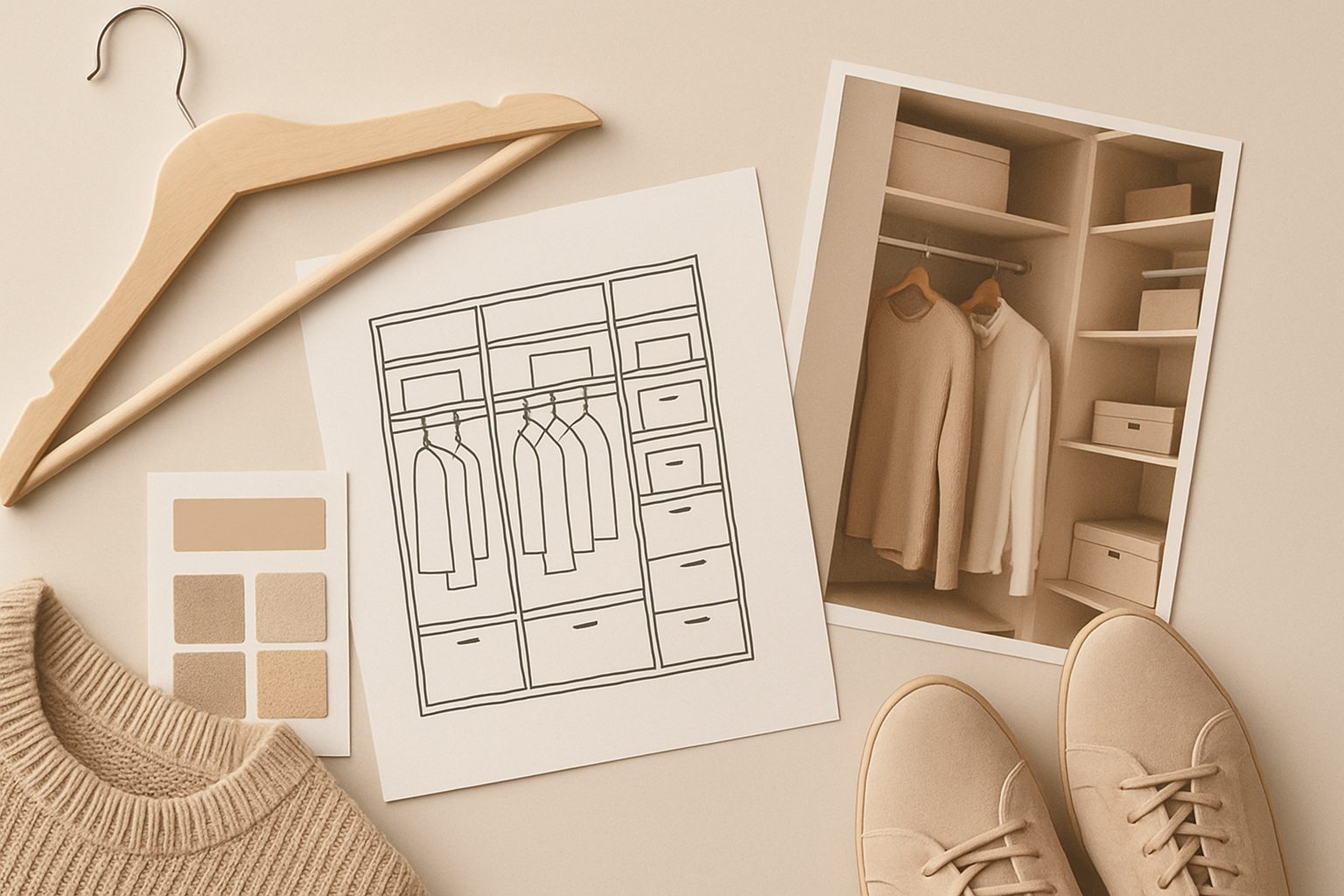
Walk-In Wardrobe Ideas for Small Bedrooms UK: Space-Saving Layouts That Work
Getting a walk-in wardrobe into a small UK bedroom sounds contradictory, but it's entirely doable. The trick isn't building bigger—it's building smarter. Whether you're working with a 6 m² box room or a modest alcove, the right layout and storage density can deliver genuine walk-in functionality without eating half your bedroom.
Why Small Spaces Demand Layout First
Before you install anything, you need a plan that accounts for the actual dimensions. Most walk-in failures in small rooms happen because people reverse-engineer the design—picking hangers, shelves, and rail systems first, then squeezing them into available space. You'll end up with a 1-foot-wide walkway that's useless.
Start instead with how you actually move through the space. If it's a corridor leading to your bed, you need a clear path. If it's an alcove off the bedroom corner, you can use three walls. If it's a separate room, you can be bolder with island storage or corner configurations.
The L-Shaped Layout (Most Common for Tight Rooms)
An L-shaped arrangement uses two perpendicular walls and typically works best in rooms from 6 to 10 m². One wall holds long hanging rails for dresses, coats and shirts; the opposite (or adjacent) wall houses shelves, drawers, and folded storage.
What this gives you:
- Rails on the longer wall maximise vertical space where it's easiest to access
- Shelving on the return wall handles shoes, bags, and bulky items
- A 2.5–3 metre walkway leaves enough room to open the door and move comfortably
- Natural or task lighting down the centre keeps everything visible
The trick is measuring twice. If your room is 3 metres by 2.5 metres, you might run a rail along the 3-metre wall, then shelving on a 1.2-metre section of the adjacent wall. That leaves a functional passageway without feeling cramped.
Maximising Vertical Height
Small bedrooms often have ceiling height you're not using. Install rails at 1.8 metres or higher—not just at shoulder level. Hanging space above your main rail (for seasonal items or lightweight pieces) adds 40% more capacity without expanding the footprint. Use vacuum-seal bags or fabric storage boxes for off-season clothes; they compress neatly on high shelves.
Shelving that runs from waist height to ceiling also disguises how small the room is. Your eye travels upward instead of feeling the tightness of the walls.
Slim-Profile Solutions That Actually Work
Standard wardrobes and shoe racks are space-wasteful. In a 6 m² room, every centimetre matters.
Slim shoe racks (20–25 cm deep instead of 40 cm) fit against the wall without protruding into your walkway. Vertical shoe storage—whether tiered racks or angled shelves—holds more pairs per linear metre than horizontal stacking.
Pull-out hanging rails are game-changing in small spaces. Instead of rail running the full depth of a cupboard or wall section, these rails extend outward when you need them and retract when closed. They let you store more garments per linear metre because you can hang double rows without the back row becoming inaccessible. A 1-metre-wide section with pull-out rails can hold 40–50 items instead of 20–25.
LED mirror units (especially tall, narrow ones) bounce light around the space, making it feel larger while serving a practical function. A 40 cm × 150 cm backlit mirror against one wall provides dressing room functionality without needing a separate vanity.
The Three-Wall Configuration (When You Have Space)
If your small bedroom has an unused corner or spare alcove, a three-wall setup wraps storage around the space. One wall holds hanging garments, the adjacent wall has shelves and drawers, and the third (shortest) wall takes a shoe rack, bags, or a small island unit for accessories.
This configuration works best when the entrance is clearly defined—usually a door or archway on the fourth wall. It feels like a proper dressing room, not just a corner of your bedroom.
What Doesn't Work in Tiny Spaces
Freestanding wardrobes look neat but waste floor space and block light. Open shelving without backing looks cluttered when you're viewing it from 2 metres away in a 3-metre room. Mirrored doors multiply visual clutter rather than elegance. Avoid these if you're below 8 m²—your wardrobe will dominate the bedroom instead of complementing it.
Lighting Changes Everything
A single ceiling light leaves corners dark. Install low-voltage LED strips under shelves or along the top of rails. These are cheap, safe in small spaces, and reveal exactly what you're reaching for. Task lighting also makes the space feel intentional rather than cramped.
Accessibility Trumps Density
The most common mistake is overstuffing. You might fit 200 garments into a 7 m² space, but if you can't reach the back without moving everything, you'll stop using half of it. Aim for 60–70% density instead. Your wardrobe should work faster, not hold more.
Real Expectations
A walk-in wardrobe in a small UK bedroom isn't glamorous. It's functional. You'll open the door, see your options, grab what you need, and move on. It won't have room for a bench or a second person. But it will eliminate the hunt for anything and free up bedroom floor space because your existing wardrobe disappears into the plan.
The payoff is a bedroom that feels larger and a dressing routine that's actually quick.
More options
- Walk-In Wardrobe LED Strip Lighting Kits (Amazon UK)
- Wardrobe Interior Organisers & Accessories Bundle (Amazon UK)
- Modular Wardrobe Storage Systems (Amazon UK)
- Hollywood Vanity Mirror & Dressing Table Lighting (Amazon UK)
- Pull-Out Wardrobe Rails & Shoe Racks (Amazon UK)