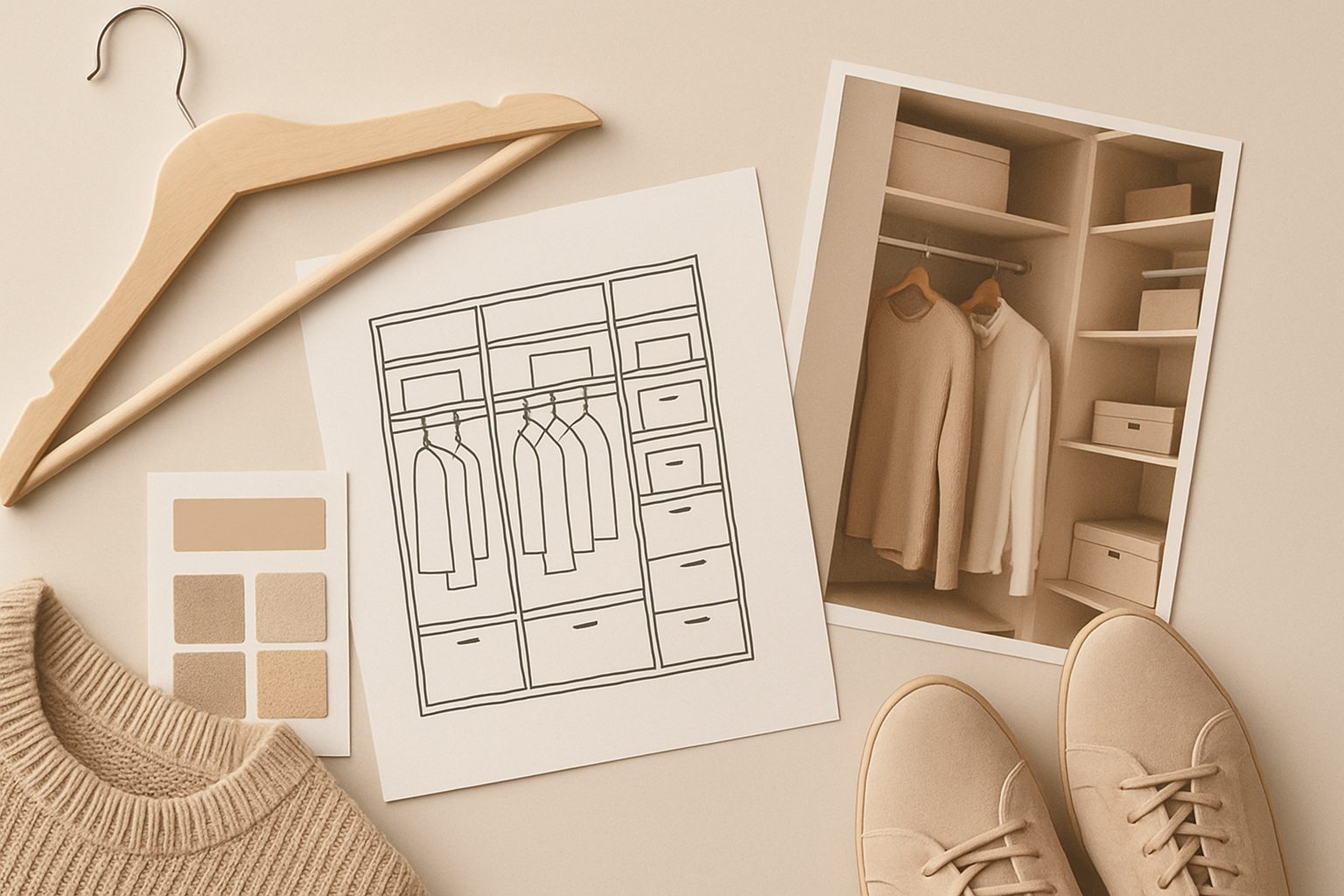
DIY Walk-In Wardrobe Kits vs Fully Fitted UK: Which Is Better in 2025?
If you're planning a walk-in wardrobe, you'll face one of two main routes: assembling a modular system yourself, or hiring a surveyor and installer for a fully fitted solution. Both approaches work, and which suits you depends on your budget, space, skill level, and timeline. Let's break down the real differences.
What DIY Wardrobe Kits Offer
Modular wardrobe systems — like IKEA PAX, Kährs, or flat-pack options from online retailers — give you flexibility and control. You choose the dimensions, shelving depth, rail height, and internal layout. Many systems accept adjustable shelves, pull-out baskets, and soft-close hinges as bolt-on extras.
Advantages of DIY:
- Lower upfront cost. A DIY kit for a 2m × 2m walk-in space typically runs £800–£2,500, depending on quality.
- No long lead times. Many systems ship within 1–2 weeks; you're not waiting 8–12 weeks for a bespoke survey and build.
- Easy to modify or relocate. If you move house or want to adjust shelving, you can disassemble and reconfigure without calling a fitter.
- Acceptable quality for standard layouts. Modern modular systems are sturdy enough for everyday use if assembled properly.
Limitations:
- Requires assembly. Unless you hire a handyperson (£400–£800), you'll spend 2–4 days assembling, with some frustration. Many people underestimate this.
- Limited to off-the-shelf dimensions. If your room is an awkward shape or has sloping ceilings, standard modules won't fit tidily.
- Less bespoke finish. You're limited to standard colours, materials, and configurations. No custom crown moulding, matching skirting boards, or made-to-measure internal dividers.
- Visible fixings and edges. Screw heads, raw MDF edges, and cable management aren't hidden—this matters if your wardrobe opens onto a bedroom or lounge.
What Fully Fitted Systems Offer
A fully fitted wardrobe is surveyed, designed, and installed by professionals. Companies like John Lewis, Fitted Bedrooms retailers, or bespoke makers like Sharps or Hammonds measure your space, design to the millimetre, and install everything—including the carcass, doors, lighting, and internal systems.
Advantages of fully fitted:
- Exact fit, zero waste. Every inch of your space is utilised. Awkward corners, sloping roofs, and alcoves are engineered around.
- Professional finish. Doors are plumb, handles aligned, internal details hidden, and external aesthetics match your décor.
- Built-in extras. Lighting, soft-close mechanisms, internal organisation systems, and matching accessories are integrated from the start.
- Longevity. Better materials and craftsmanship mean fewer repairs over 10–15 years.
- One point of contact. The company handles measurement, design approval, delivery coordination, and installation—you don't manage multiple steps.
Limitations:
- Significantly higher cost. A fully fitted 2m × 2m walk-in ranges from £4,500–£12,000+, depending on finishes and internal specification.
- Long timescales. Survey, approval, manufacture, and installation typically take 10–14 weeks.
- Committed to the design. Changing your mind after approval costs money; moving the wardrobe is impractical.
- Less flexibility post-installation. Internal shelving can sometimes be adjusted, but major layout changes are costly.
Real Cost Comparison
DIY modular system (2m × 2m space):
- Basic kit: £800–£1,200
- Assembly help or handyperson: £400–£800
- Extras (lighting, baskets, hinges): £200–£500
- Total: £1,400–£2,500
Fully fitted (2m × 2m space, mid-market brand):
- Survey and design: included
- Carcassing and doors: £2,500–£5,000
- Internal fittings, lighting, handles: £1,500–£3,000
- Installation labour: £800–£1,500
- Total: £4,800–£9,500
For a larger or more complex space, fitted costs scale faster because bespoke components are charged individually. DIY costs scale more linearly—you're buying more of the same modules.
Which Should You Choose?
Go DIY if:
- Your budget is under £3,000.
- Your room is a straightforward rectangular shape.
- You don't mind the aesthetic of visible fixings or want to paint/finish the exterior yourself.
- You can handle assembly or afford a handyperson's time.
- You might move house within 5 years and want portability.
Go fully fitted if:
- Your budget is £5,000+.
- Your space has alcoves, sloping ceilings, or an irregular footprint.
- You want a seamless, high-end finish that matches the rest of your home.
- You value your time—installation stress and assembly headaches don't appeal.
- You plan to stay in the property 10+ years and want durability and resale appeal.
The Middle Ground
Some people use hybrid approaches: a modular kit as the backbone, with a local joiner adding a bespoke door frame or custom shelving on top. This costs £2,500–£4,000 and can offer both flexibility and finish—but requires finding a reliable tradesperson.
What Happens Next
If you're leaning DIY, research specific systems—check reviews, watch assembly videos, and factor in help costs. If you're leaning fitted, get 2–3 quotes from local retailers or national brands. Either way, measure your space twice and think about what you actually need inside the wardrobe before committing.
The best solution is the one that fits your space, timeline, and wallet. There's no universal answer—just honest trade-offs.
More options
- Walk-In Wardrobe LED Strip Lighting Kits (Amazon UK)
- Wardrobe Interior Organisers & Accessories Bundle (Amazon UK)
- Modular Wardrobe Storage Systems (Amazon UK)
- Hollywood Vanity Mirror & Dressing Table Lighting (Amazon UK)
- Pull-Out Wardrobe Rails & Shoe Racks (Amazon UK)